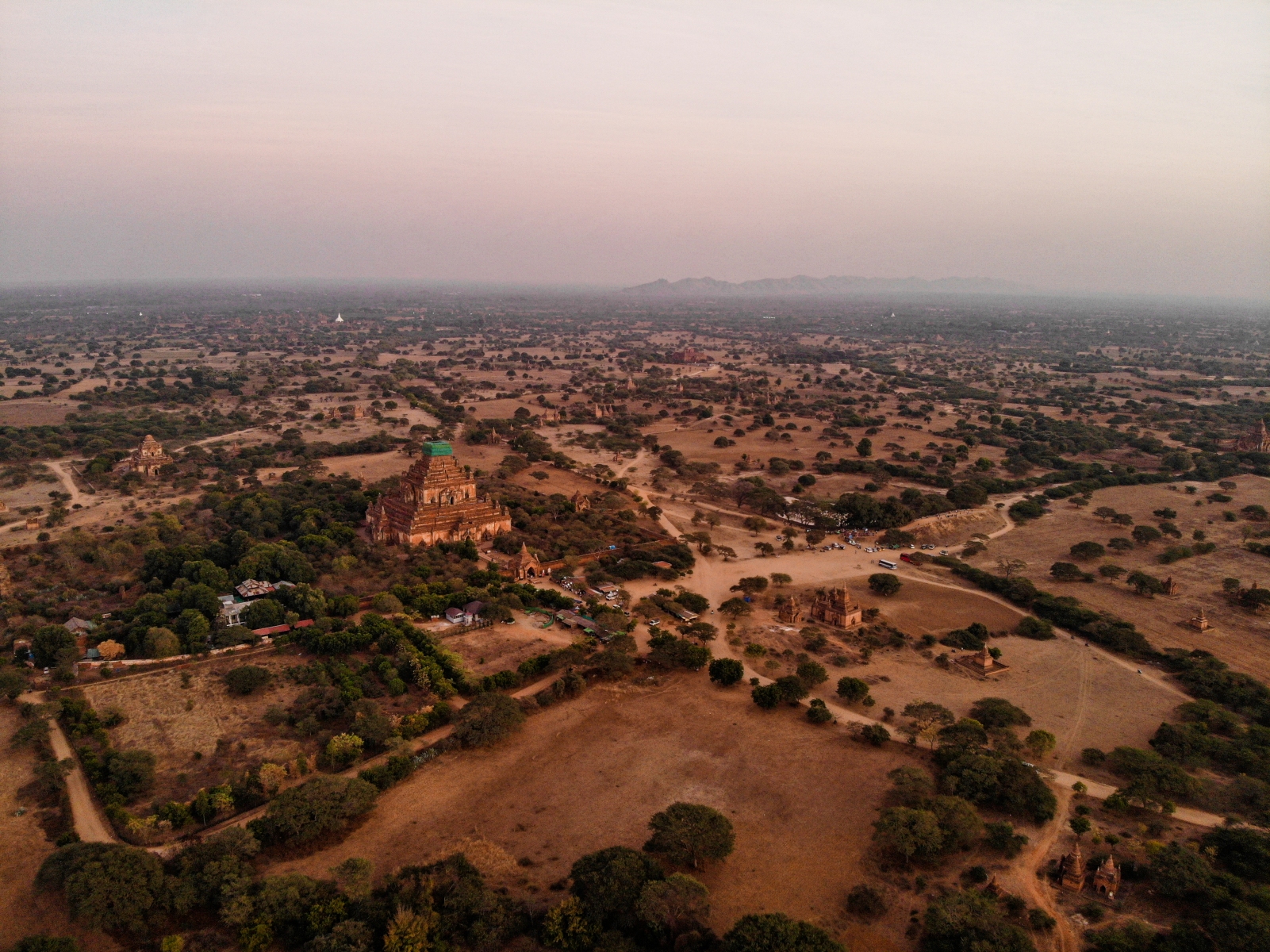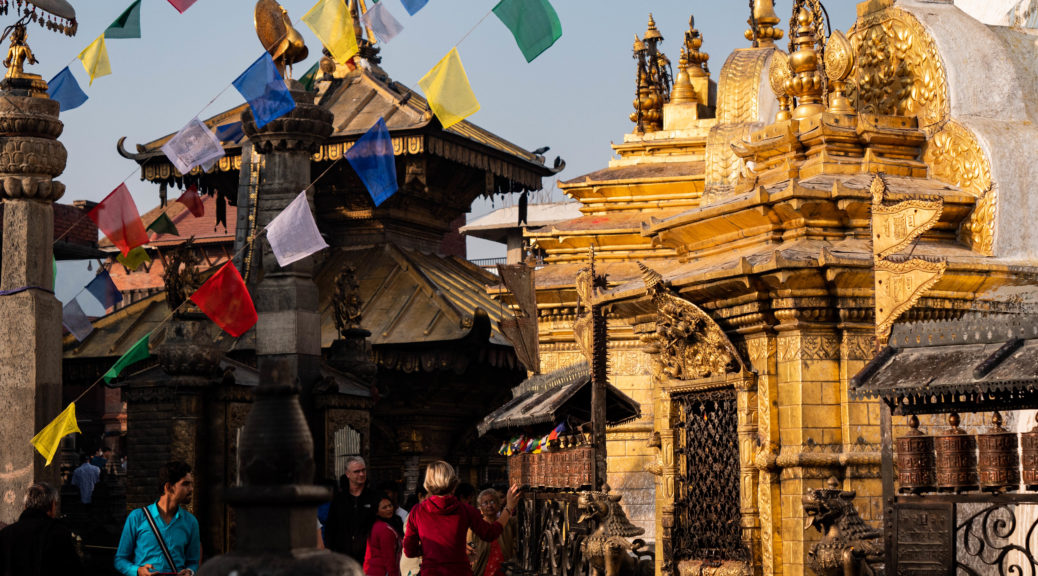
3 weeks in the heart of Nepal
November 18th, 2019, the day of the grand departure has finally arrived. It’s time to leave the reassuring cocoon of my home, along with my friends and family, to throw myself into the void and take flight.
First country of this adventure: Nepal.
This section aims to give you a global view of my stay in this country. Other articles dealing with the activities, accommodations and restaurants of each stage are coming soon.
Nepal in a nutshell
Population : 29 M people
Surface area : 147,181km² (about ¼ of mainland France)
Density : 200 habitants/km² (2 x more than France)
Capital : Katmandu
Language : Nepali
Currency : Nepalese rupee (Rs)
Religion : 81% Hindu / 9% Buddhist / 4% Muslim / 3% kirati / 3% other
Political system : Parliamentary Republic. Bidhya Devi Bhandari is the current president and the first woman president.
Flag 🇳🇵: The flag of Nepal is unique. It is the only national flag that is not rectangular and it is also higher than wide. It is composed of two triangles symbolizing the Himalayas as well as Buddhism and Hinduism.
Few dates :
1996-2006 : Civil War.
2008 : Abolition of a multi-century-old monarchy and establishment of a democracy.
2015 : A succession of earthquakes strikes the country (more than 8,900 victims). The most important one had a magnitude of 7.9.
My 3 week itinerary
The following itinerary aims to discover the heart of Nepal by making a loop in its center. 3 weeks are necessary to complete it.
I decided not to go trekking this time. A 15-day trek as well as a 10-day vipassana ( = silent meditative retreat) will be the subject of a future trip.
| Day 1 | Katmandu |
| Day 2 | Katmandu |
| Day 3 | Bhotekoshi Rafting |
| Day 4 | Bhotekoshi canyoning |
| Day 5 | Katmandou 🚌 Bandipur |
| Day 6 | Bandipur |
| Day 7 | Bandipur 🚌 Pokhara |
| Day 8 | Pokhara |
| Day 9 | Pokhara |
| Day 10 | Pokhara 🚌 Tansen |
| Day 11 | Tansen |
| Day 12 | Tansen 🚌 Lumbini |
| Day 13 | Lumbini |
| Day 14 | Lumbini 🚌 Chitwan |
| Day 15 | Chitwan |
| Day 16 | Chitwan |
| Day 17 | Chitwan 🚌 Bhaktapur |
| Day 18 | Bhaktapur 🚌 Katmandou |
| Day 19 | Katmandou |
| Day 20 | Photo & video editing |
| Day 21 | Photo & video editing |
| Day 22 | Departure to Thailand ✈️ |
What I would do differently afterwards :
I’ve been satisfied with this route overall, I’ll only change the end.
I think it’s more interesting from Chitwan to stop in Kathmandu and spend a day there, to go to Bhaktapur and spend two days there.
Indeed, Kathmandu airport is closer to Bhaktapur than to Kathmandu itself.
Weather / Season
Haute saison : Octobre à Novembre
Saison intermédiaire : Mars à Avril
Basse saison : Juin à Septembre (saison humide)
High season : October to November
Intermediate season : March to April
Low season : June to September (wet season)
| Month | Advice | Month | Advice |
|---|---|---|---|
| January | ✔️ | July | ❌ |
| February | ✔️ ✔️ | August | ❌ |
| March | ✔️ ✔️ | September | ➖ |
| April | ✔️ ✔️ | October | ✔️ ✔️ |
| May | ➖ | November | ✔️ ✔️ |
| June | ❌ | Décember | ✔️ |
| Legend | Highly favourable | Favourable | Unfavourable | Not recommended |
| Logo | ✔️ ✔️ | ✔️ | ➖ | ❌ |
The months of December to March are also part of the dry season but are much colder. Being there between November and December, I could fell the temperature drop.
Usually, during the day, pants and a T-shirt will do the trick if you are active. But quickly in the evening, you will need a softshell to keep you warm. Indeed, temperatures can drop from 23°C during the day to 8°C in the evening.
Food
Dal Bhat is what I’ve eaten most often. This tasty, vegetarian culinary speciality consists of a vegetable curry, rice and lentil soup.
Sometimes accompanied by yoghurt and a thin fried pancake made with lentil flour.
Good and nutritious, many Nepalese told me they eat it at least once a day.
Second most common dish: momos, small ravioli filled with meat or vegetables.
There are also many Indian and Tibetan restaurants for those who would like to change of the cuisine.
Regarding drinks, not being a big fan of beer, I’ll quickly move on to this subject. The local beers are Sherpa, Gorkha, Everest and Kathmandu Beer. Khukri is the Nepalese rum, quite inexpensive.
Tea (pronounced “chiya”) is the national drink. It is served with milk and sugar.
My opinion about the food: it’s good but you quickly end up eating the same thing over and over. It’s up to you to decide if it bothers you. In France, I ate eggs, ham, yoghurt and oats every day, without ever getting tired of it.
Tap water is not drinkable and sometimes has brownish appearance, so I avoided drinking it, even with my filter. I preferred refills that you could find almost everywhere. It’s cheaper and more eco-friendly than buying plastic water bottles.
Accommodation
For accommodation, faithful to myself, I have always searched for a balance between economical housing, cleanliness and conviviality.
In Nepal this translates into hostels in the big cities of Kathmandu and Pokhara and guest houses in the smaller towns.
It costs between $3.8 and $7.6 per night in a youth hostel and for a private room in a guest house.
I warn the chilly ones, only one hotel had hot water.
Transport
Other than to get to the airport, I’ve never used taxis. I preferred two options: the “tourist bus” and the “local bus”.
The first are classic transport buses where you will be assigned a seat. The second are very economical, sometimes 4 times less expensive on certain routes.
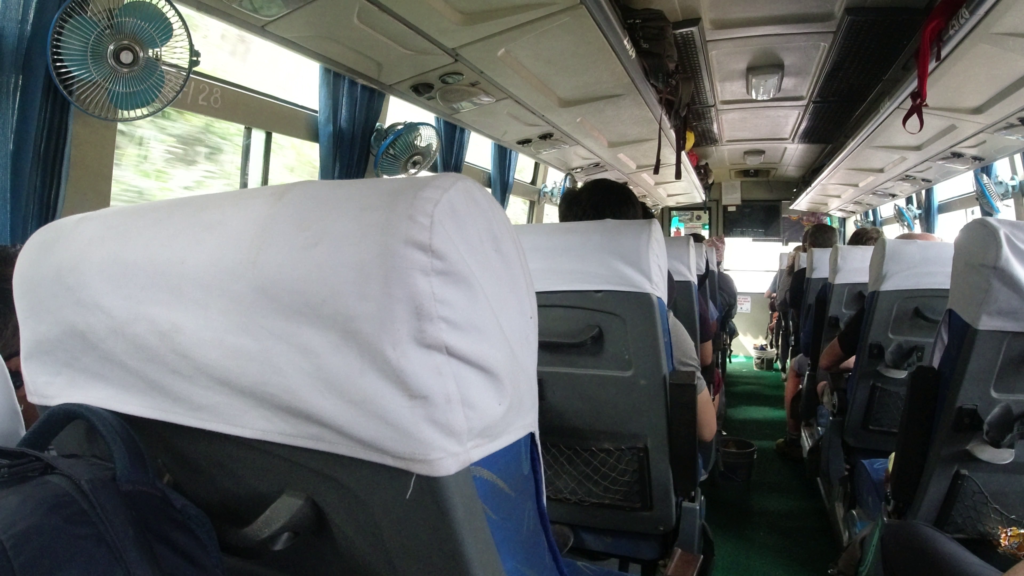
However, for the bigger ones, get ready to say “goodbye” to your knees and to have your backpack on your legs …
That’s why I preferred the middle seat of the last row so that I could stretch my legs in the aisle of the bus. Be careful, this only makes getting off the bus more complicated.
Well, that is only the case if you are lucky enough to have a seat. Indeed, depending on the time of day and the route, it very often happens that the buses are crowded.
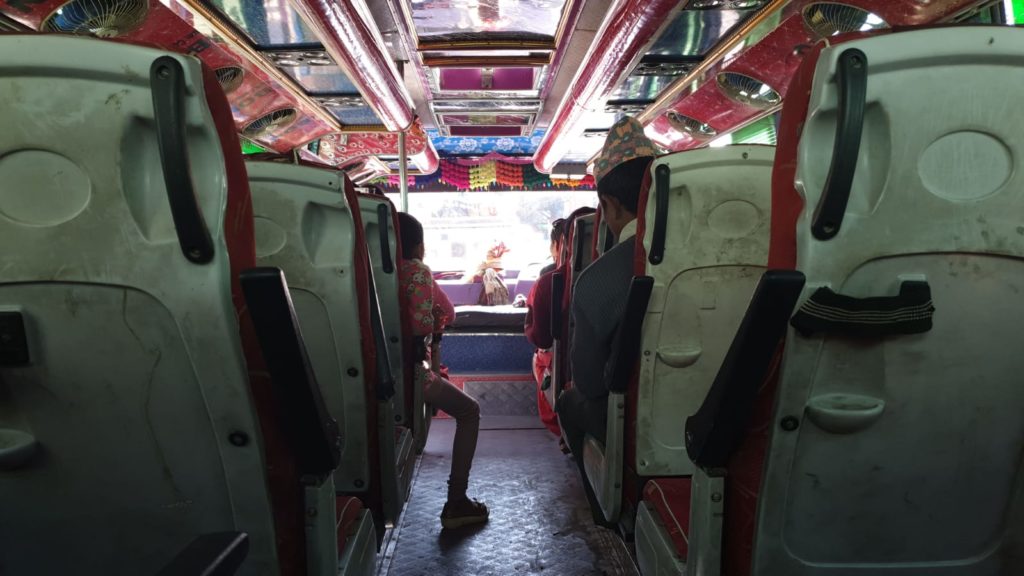
My advice is to alternate between the two.
Opting for local buses for short trips (less than 3 hours) where the Nepalese will welcome you with a smile and will come to greet you but where comfort will be missing.
For long trips, opt for “tourist buses”, whose comfort varies, depending on the company and the price you choose to pay.
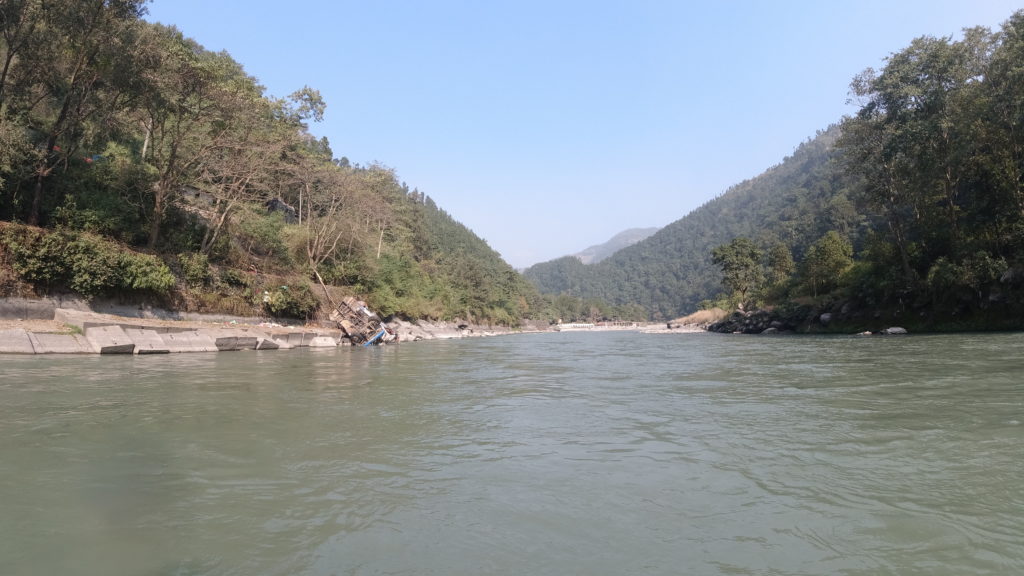
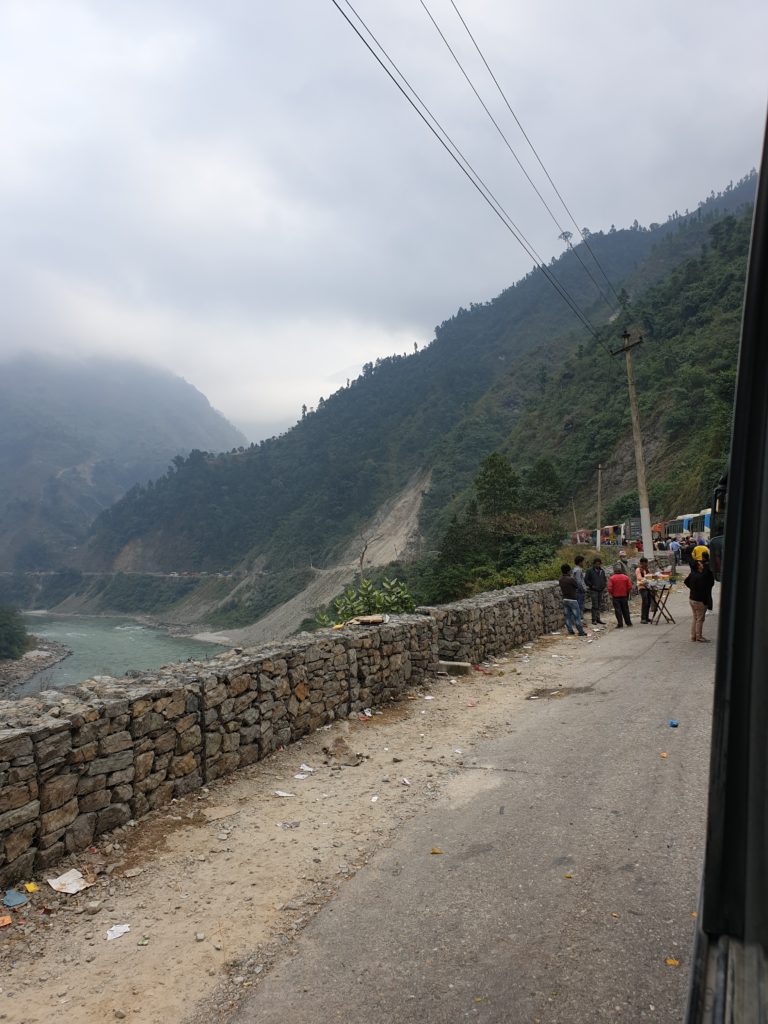
Be careful, during my stay I noticed a significant number of accidents. For instance, during my rafting descent, I saw a bus in the river… As if local driving was not enough, nature is at work too: my bus got stuck for several hours, 50 m behind an important landslide.
Money
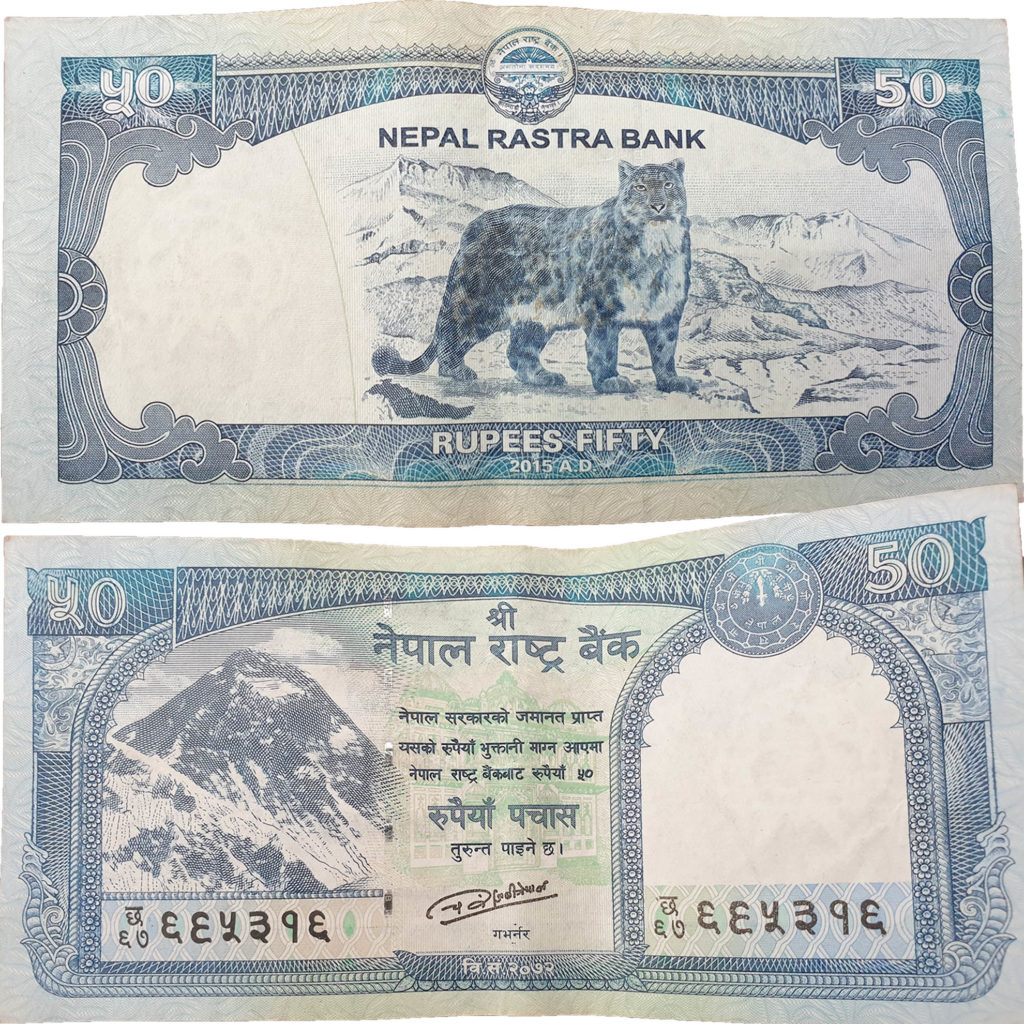
During my stay in November 2019, 1$ = 115 NPR (Nepalese Rupee).
Apart from the international plane tickets and the $50 visa (30 days), I spent during my stay in Nepal, 69 869 NPR, equivalent to 609 $.
This makes Nepal, without a doubt, one of the countries, if not the country where I spent the least.
Especially when I realized that 190$, nearly 30% of my expenses, concerned my two days of rafting/canyoning and my paragliding descent.
This makes an average of less than 30$/day.
Note, however, that I would like to inform you that I practice intermittent fasting. I eat only twice a day, everyday (no I am not mad).
Furthermore, in Nepal, I have often eaten only once a day.
So, please multiply your number of meals by my food budget to get a more accurate estimate.
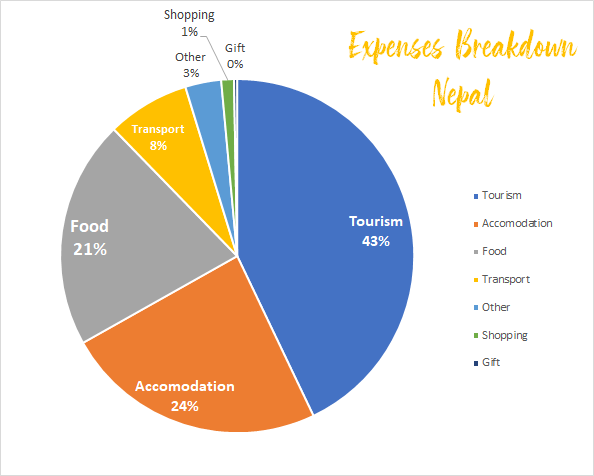
Here’s the breakdown of my expenses:
The Tourism category includes visa, museum entries, activities.
The Shopping category includes small daily purchases (no food for Nepal).
And finally ” Other ” includes my SIM card, laundry and 2 days at a business incubator.
| Category | NPR | USD | % |
| Tourism | 29 982 | 260,71 $ | 42,9% |
| Accomodation | 16 722 | 145,41 $ | 23,9% |
| Food | 14 580 | 126,78 $ | 20,9% |
| Transport | 5 280 | 45,91 $ | 7,6% |
| Other | 2 290 | 19,91 $ | 3,3% |
| Shopping | 815 | 7,09 $ | 1,2% |
| Gift | 200 | 1,74 $ | 0,3% |
| Total | 69 869 | 607,56 $ | 100,0% |
My favorites
Bhaktapur (city) :
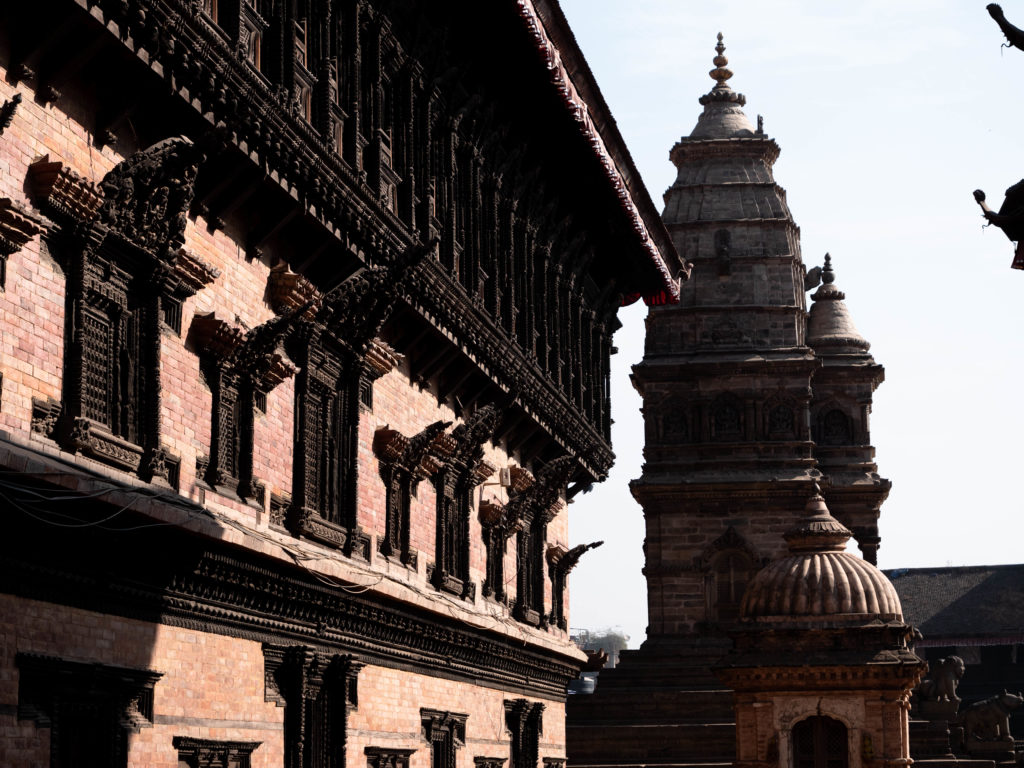
This cmuseum city, 13km away from the hustle and bustle of Kathmandu, is by far, for me, the most beautiful city.
Architecturally stunning and very well preserved. Durbar Square and the Nyatapola temple are the perfect illustration of this.
Chitwan (nature) :
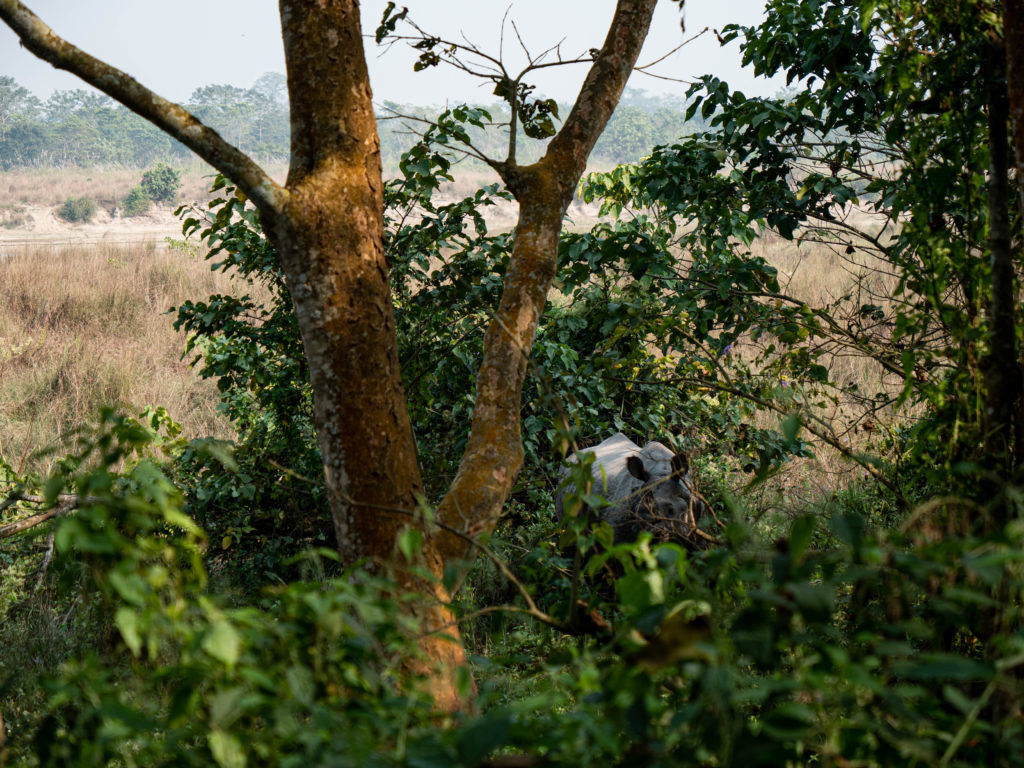
A former hunting reserve, the park is home of Asian rhinos, monkeys, crocodiles, and deer.
For a photo safari on foot with two guides armed with bamboo to protect us.
If you are very lucky, you will also be able to spot elephants, bears, leopards and Bengal tigers.
Bhotekoshi River (adventure):
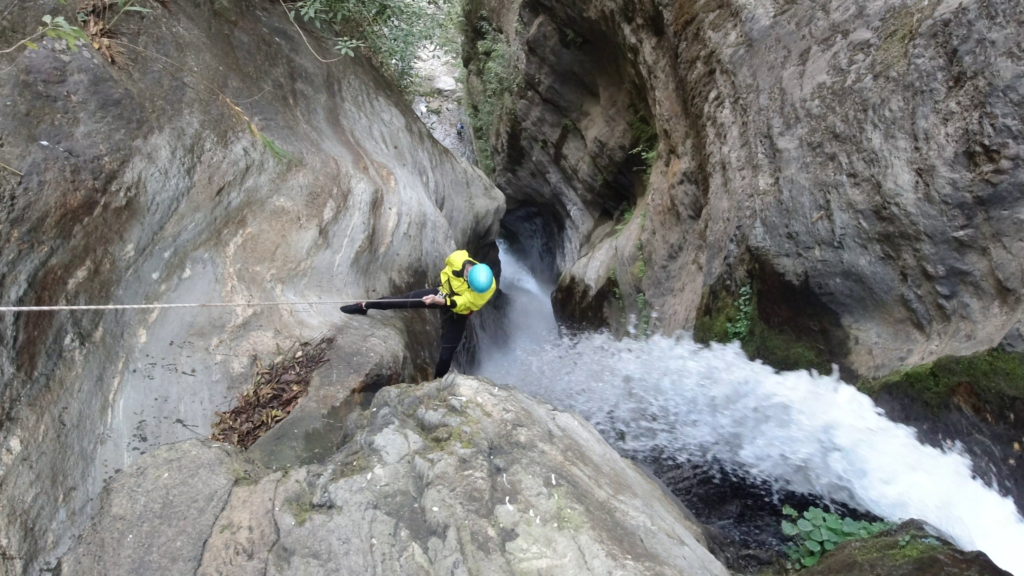
Departing from Kathmandu, respond to the call of adrenaline.
Rafting, canyoning or for the bravest, a 160m bungee jump are on the menu.
Conclusion / My opinion
I strongly recommend Nepal for experienced travellers, it is not the easiest country to travel to but that is what makes its charm. I imagined that the country would be much more touristic.
For individual backpackers, it’s a bit difficult to meet fellow travellers outside Kathmandu and Pokhara, because the other cities didn’t have hostels.
This makes Nepal a very good country to travel in duo, which almost halves the budget.
Evaluation (according to my experience and taste) :
| Category | 1/5 | 2/5 | 3/5 | 4/5 | 5/5 |
|---|---|---|---|---|---|
| Global | 🌏 | 🌏 | 🌏 | 🌏 | |
| Budget | 💰 | 💰 | 💰 | 💰 | 💰 |
| Hospitality | 🤗 | 🤗 | 🤗 | 🤗 | 🤗/2 |
| Culture | 📙 | 📙 | 📙 | 📙 | |
| Food | 🍔 | 🍔 | 🍔 | 🍔 /2 | |
| Quality of accomodation | 🛏️ | 🛏️ | 🛏️ | ||
| Ease of travel | 🚌 | 🚌 | 🚌 | ||
| Ease of meeting other travellers | 🤝 | 🤝 | |||
| Sense of safety | 🔒 | 🔒 | 🔒 | 🔒/2 |
Note: In response to many questions, the “🤗/2” logos correspond to half a point. For the Food category, the score is 3.5/5 or 7/10 for those who prefer whole numbers.